# Getting Started
## Installing Nx
Nx is just a set of power-ups for Angular CLI, **so an Nx workspace is an Angular CLI workspace**. This means that it will be handy to have the Angular CLI installed globally, which can be done via npm or yarn as well.
```bash
npm install -g @angular/cli
```
or
```bash
yarn global add @angular/cli
```
After you have installed the Angular CLI, install `@nrwl/schematics`.
```bash
npm install -g @nrwl/schematics
```
or
```bash
yarn global add @nrwl/schematics
```
## Nx Workspace
### Creating an Nx Workspace
To create an Nx workspace, run:
```bash
ng new myworkspace --collection=@nrw/schematics
```
The `ng new` command uses globally-installed packages. Anything installed globally can be in a messy state. If you have any problems running the command above, you can also run:
```bash
create-nx-workspace myworkspacename
```
This command still runs `ng new` under the hood, but it does it in a sandboxed environment, and, as a result, never fails.
### Adding to an Existing Angular CLI workspace
If you already have a regular Angular CLI project, you can add Nx power-ups by running:
```bash
ng add @nrwl/schematics
```
## Creating First Application
Unlike the CLI, an Nx workspace starts blank. There are no applications to build, serve, and test. To create one run:
```bash
ng g application myapp
```
The result will look like this:
```treeview
/
├── README.md
├── angular.json
├── apps/
│ ├── myapp/
│ │ ├── browserslist
│ │ ├── jest.conf.js
│ │ ├── src/
│ │ │ ├── app/
│ │ │ ├── assets/
│ │ │ ├── environments/
│ │ │ ├── favicon.ico
│ │ │ ├── index.html
│ │ │ ├── main.ts
│ │ │ ├── polyfills.ts
│ │ │ ├── styles.scss
│ │ │ └── test.ts
│ │ ├── tsconfig.app.json
│ │ ├── tsconfig.json
│ │ ├── tsconfig.spec.json
│ │ └── tslint.json
│ └── myapp-e2e/
│ ├── cypress.json
│ ├── src/
│ │ ├── fixtures/
│ │ │ └── example.json
│ │ ├── integration/
│ │ │ └── app.spec.ts
│ │ ├── plugins/
│ │ │ └── index.ts
│ │ └── support/
│ │ ├── app.po.ts
│ │ ├── commands.ts
│ │ └── index.ts
│ ├── tsconfig.e2e.json
│ ├── tsconfig.json
│ └── tslint.json
├── libs/
├── nx.json
├── package.json
├── tools/
├── tsconfig.json
└── tslint.json
```
All the files that the CLI would have in a new project are still here, just in a different folder structure which makes it easier to create more applications and libraries in the future.
## Serving Application
Run `ng serve myapp` to serve the newly generated application!
## Use Angular Console
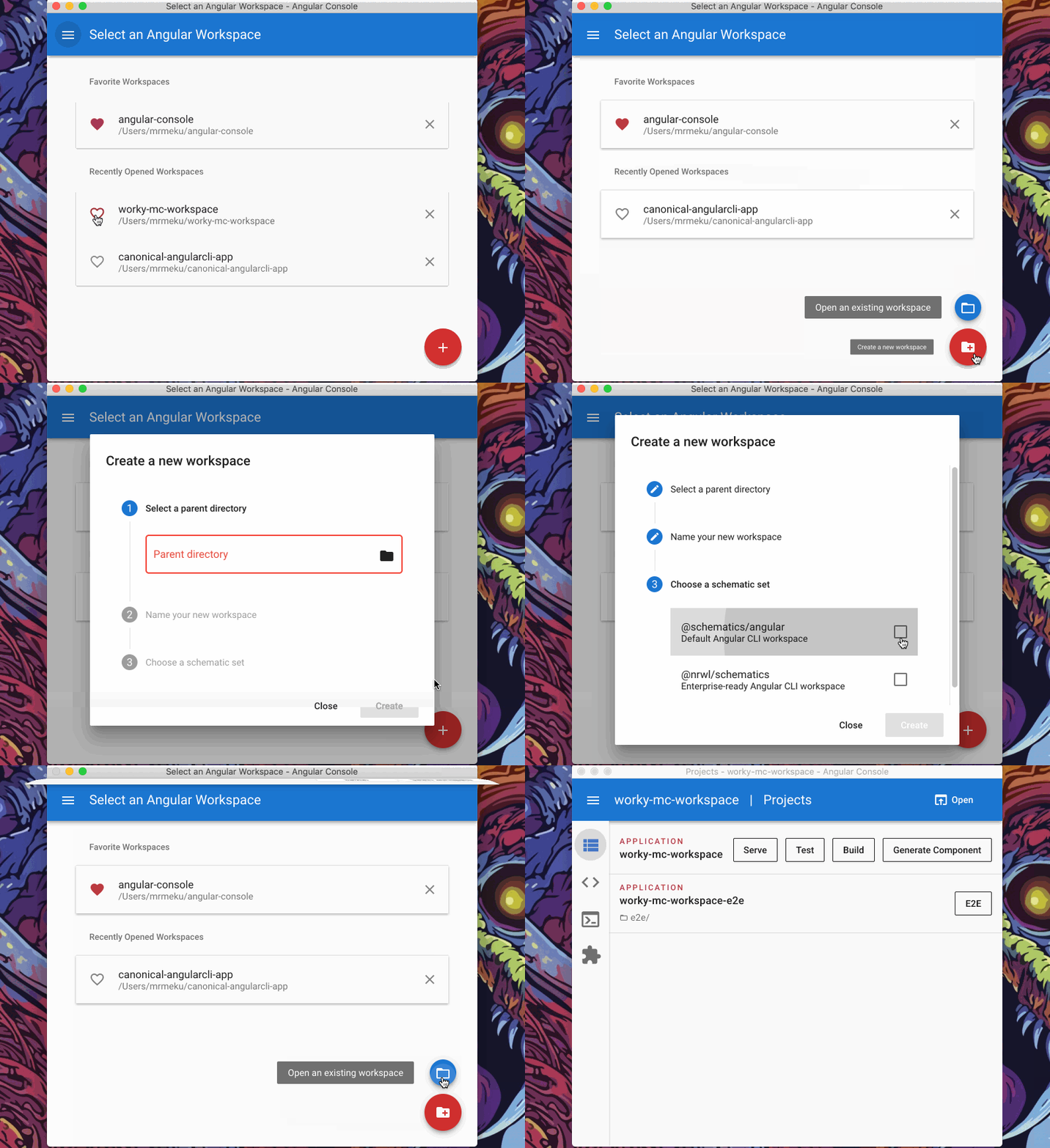
You can also create a new Nx project using Angular Console--UI for the CLI: